Your weekly dispatch of Filipino art, artists, history, exhibitions & culture.
*The paid portion is in progress and I will continue to test out ways to provide additional value & perks but it overall supports the work going into creating the entire newsletter.
FILIPINO ART DISPATCH AT A GLANCE -
Why The Filipino Art Dispatch?
Whats happening - exhibitions and events
A Little Piece of Filipino American History🇵🇭🇺🇸 Filipino American History Month special
Artist Spotlight: Jonalyn San Diego
Who Will Preserve Our Filipino Stories? A Conversation with Chiara Cox
I started Filipino Art Dispatch after visiting an Asian museum in the Bay Area and realizing just how little of the Philippines was represented. It left me wondering: How much of our history and culture are we missing out on, and who’s going to make sure these stories get passed down?
That question is still at the heart of Filipino Art Dispatch. I’m always coming across things about Filipino history, art, and culture that I wish I’d learned sooner, and I want to share them with you. Whether it’s an artist you’ve never heard of, a piece of history that never made it into your textbooks, or something about our culture you’ve been curious about, I hope you walk away from each issue having learned something new.
A lot goes into bringing these stories to you, from researching and reaching out to people to putting each issue together. Paid subscriptions help me dedicate more time to building Filipino Art Dispatch, but there are plenty of other ways to support this work, too. Every free subscription, share, recommendation, and follow helps these stories reach more people.
Thanks for being here, learning alongside me, and helping keep these stories alive. ❤️
The Filipino Art Dispatch is a reader-supported publication. To receive new posts and support my work, consider becoming a free or paid subscriber.
WHAT’S HAPPENING
TO SUBMIT EVENTS / EXHIBITIONS TO BE FEATURED: SUBMISSION FORM
Current Exhibitions
*keeping current exhibits here because there’s not that many and I want to make sure people always easily find existing exhibits to check out
Buwaya Baby Duo Exhibition by Lea May Rivera & Marea Cordero 📍 Seattle, WA -ARTS at King Street Station 📅 Now - Nov 7, 2026
Buwaya Baby is an art exhibit featuring works by Heidi Grace Acuña. Step into a portal of protection and ask the buwaya (crocodiles) to guide you and our descendants. This interdisciplinary exhibit features textile and television installations and ceramic sculpture offerings.
Soul Anchors of The Filipina Duo Exhibition by Lea May Rivera & Marea Cordero 📍 Chicago, IL- Mana Contemporary, Suite 316 📅 Now - Nov 22, 2026
Soul Anchors of the Filipina is a joint exhibition featuring the works of Marea Cordero and the late Lea May Rivera. Centered on themes of grief, memory, and ancestry, the exhibition explores the spiritual resonance and enduring strength of women across time and loss.
Mountain Spirits: Rice and Indigeneity in the Northern Luzon Highlands, Philippines 📍 Los Angeles, CA - Fowler Museum UCLA 📅 Now - January 2027
Mountain Spirits explores the culture and traditions of the Ifugao people of northern Luzon and the incredible rice terraces they have shaped for generations. The exhibition features carved figures, woven textiles, farming tools, ritual objects, soundscapes, and video that show how land, community, spirituality, and daily life are connected. It’s worth checking out if you want to learn more about Ifugao culture and the history behind the rice terraces—not just as an incredible feat of engineering, but as a living part of the community.
Balikbayan is a site-specific installation by Filipino artist Sonja John at the Katonah Museum of Art. Combining collage, stencils, and light, John brings together her New York surroundings and her family’s roots in Jamaica, Trinidad & Tobago, and the Philippines. The work explores how migration, family memories, nature, and cultural traditions shape our sense of home and identity.
Imagining an Archipelago: Art from Cuba, Guam, The Philippines, Puerto Rico, and their diasporas 📍 Waterville, Maine, - Colby College Museum of Art 📅 Now - June 6, 2027
Imagining an Archipelago brings together contemporary artists from Cuba, Guam, the Philippines, Puerto Rico, and their diasporas to explore how these island communities have been shaped by colonialism, migration, and U.S. expansion. Through painting, photography, sculpture, weaving, film, and more, the artists explore themes of identity, displacement, military occupation, and cultural resilience.For Filipinos, this exhibition is an opportunity to see Philippine history placed alongside the histories of other islands that have also been shaped by U.S. power. It’s a chance to think about how the Philippine-American War, colonialism, and migration continue to shape Filipino identity and the Filipino diaspora today.
* Exhibit is traveling to Puerto Rico, San Francisco & New Jersey in 2027 -2028
This family-friendly program celebrates Filipino American History Month by introducing children to Filipina American artist Pacita Abad and her artwork. Participants will then create their own abstract mixed-media paintings. Recommended for ages 5–11 with a parent or caregiver.
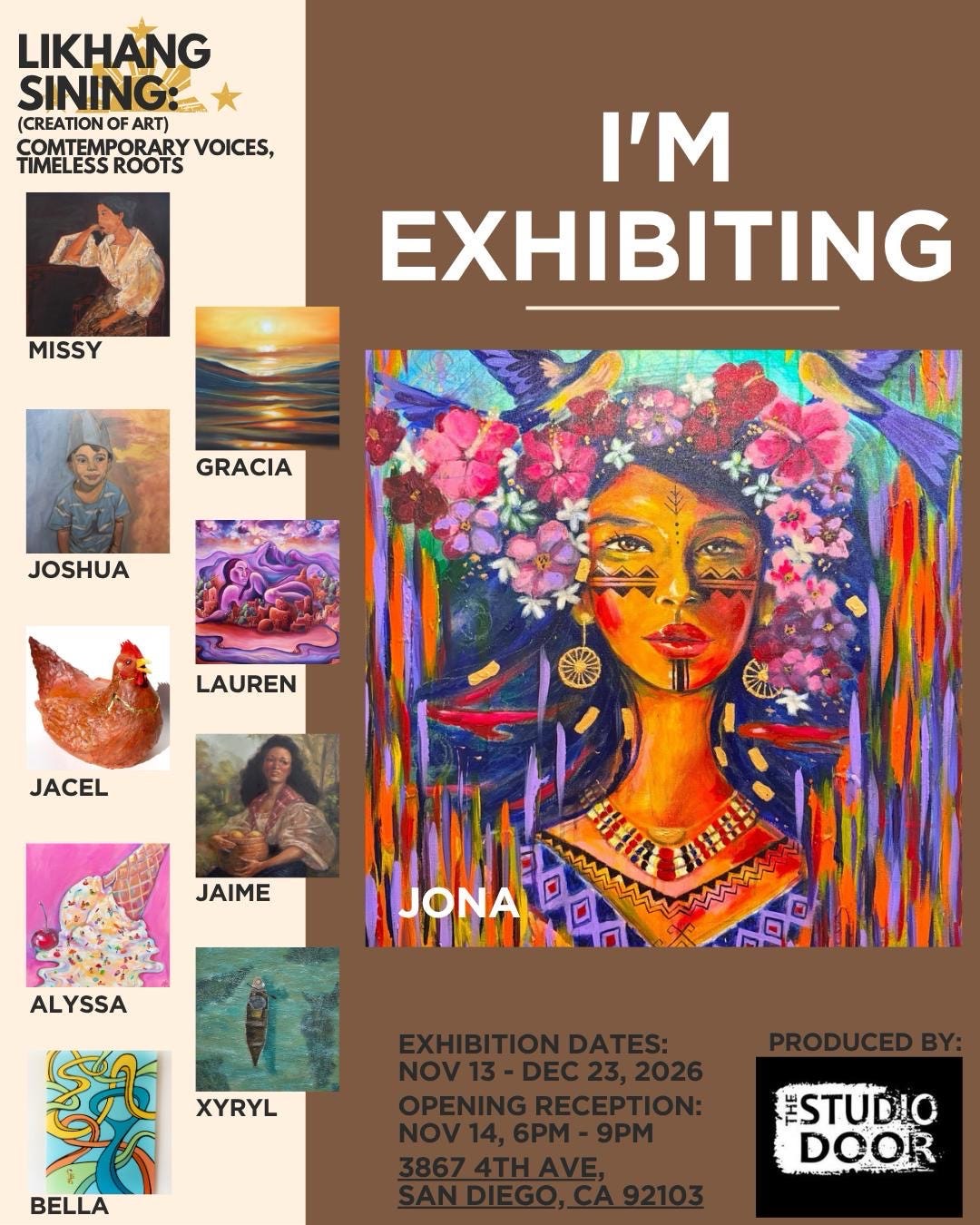
📍 The Studio Door, San Diego, CA · 📅 Nov 14, 6pm-9pm
LIKHANG SINING means “creation of art.” The exhibition brings contemporary perspectives to Filipino heritage through works ranging from painting to ceramics along with mixed media. At its heart are the stories that connect where the artists come from with who they are becoming.
A lot of Filipino American history isn’t sitting in a textbook. It’s in family photographs, letters, newspapers, community organizations and stories passed down from one generation to another. That’s part of why Dorothy Laigo Cordova and Fred Cordova founded the Filipino American National Historical Society in 1982—to document, preserve and share Filipino American history. But preserving history isn’t only the job of historians or museums. Sometimes it starts with asking your grandparents a question, writing down a family story or finding out who the people in that old photograph are.
ARTIST SPOTLIGHT
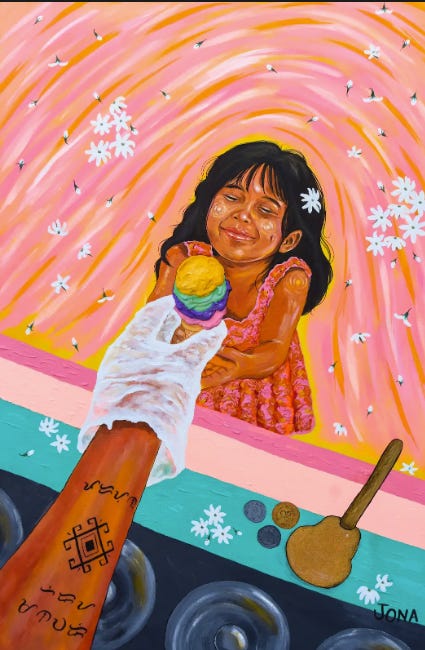
Jonalyn San Diego is a multidisciplinary artist and nurse, born and raised in the Zambales, Philippines. Her work is inspired by the vibrant colors, everyday moments, and cultural memories of home. Through playful, nostalgic, and culturally rooted artworks, she transforms childhood memories and familiar Filipino experiences into joyful visual stories. Her creative work has opened doors to collaborations with organizations including NikeLA, Shoe Palace, FilAmArtsLA, UPAAGLA, Ayta Dreamers Club, Directing Change, SIPA Cares, Rising Filipinas, House of Philippines Balboa & Kabataan Culture.
For someone seeing your art for the first time, how would you describe what you make?
I create nostalgic, colorful artworks that depict the Filipino life & represent the Filipino culture in a light, colorful way through my personal perspective.
Your work uses bright, bold colors and layers of acrylic and oil. What does your process look like, and how do you use color and layering to bring out a feeling, memory, or story?
The very beginning process of my artworks usually start with a flood of memory. A scent triggers nostalgia, a song, a story. Sometimes I sit with the thoughts for days. Sometimes, I grab my pencil & sketchbook and create the concept using the traditional pencil & paper process. I plan my artworks through that, then sketch directly on the canvas. Painting each art piece somehow has different timelines. I have paintings that took 2 years to finish. These are the paintings I hold on to dearly. Because they’ve become part of my daily life for those 2 years. I’d either work on them, or stare at them on a daily basis. There were times when I’d work on a painting while feeling sad, and use blue hues. I use orange and yellow hues when I’m happy. The ability to add layers is one of the reason why I love working with acrylic. I also have paintings that took me 4 hours to finish because I was so inspired and full of emotions, too excited to finish the piece.
You also create Filipino-inspired tattoos, including work with Tatak Pilipino and Baybayin. What drew you to tattooing, and what does it mean to you to bring Filipino scripts and imagery into this work?
I’ve always wanted to be a tattooed person. As a 20 year old, after I finished my BSN in the Philippines and got my RN license there, I swore to myself that I will get the Filipino traditional patterns tattooed on me. When I was living in Baguio City, I met many of my Igorot friends that turned into family. My sisters and I have recognized and felt some unexplained deep familiarity & connection to our friends there. I remember me & my friends having conversations about tattooing. They were the ones who introduced me to their tattooing history & their customs after being with them almost daily & being invited into their homes and lives. I’ve also met many of my instructors & mentors in Saint Louis University & University of the Cordilleras. As an artist, I see body art as one of the highest forms of art because it lives with the person receiving it. I am focusing on our ancient tradition of tattooing. I want to be a part of the movement to keep it alive in our respective communities, especially in the communities with known & documented tattooing tradition and was erased completely. I believe in honoring our ancestors through carrying the marks that connect us to them, whether it’s traditional patterns, contemporary or Baybayin. I am a Batek Apprentice as well and I am taking my time in actually learning more about my family history and my lineage first. I grew up in the Philippines, in a close-knit community, around family and close relatives. We have strong spiritual beliefs. I’ve seen, witnessed & have participated in many rituals that were passed down to us by our ancestors. Our traditions are ingrained in me, and still applied in my daily life. Because of my experiences & because I carry the gifts that were passed down for many generations in my family, I am taking my time in learning more and truly understanding what this means to me personally and to my community. When I was learning how to read and write in Baybayin, many people have come to me and showed me their baybayin tattoos from the past. There were many who unfortunately have gotten the wrong symbols/translations permanently marked on their skin. My goal is to be one of the ones to create and mark the correct symbols so that our people can carry them proudly. I am evolving, learning, & growing, and I hope that every person I touch will leave our studio carrying markings that can help them stay in their journey of reconnecting with their culture and learning more about their identity.
How does being Filipino show up in your art?Are there certain parts of Filipino culture, history, or identity that you find yourself coming back to?
Most of my artworks now have carried me back to my roots, back to where I came from. Growing up in Zambales, living in Baguio City and now, as an immigrant who’s living far from my motherland, I reconnect & reminisce my good happy days through my art. I love reflecting mostly the positive sides of our Filipino culture through my art because I believe that despite all the negativities in our culture & country, there are so much more to love about it. I also recognize the corruption & toxic side of our culture by speaking up when needed. I have created political artworks out of anger & grief. One was displayed in an exhibition alongside amazing artists in Riverside, Ca. A huge part of me don’t believe that it’s hard to love the Philippines. It is actually easy, only if you look at the very core of who we are as people. There is so much to love about our country & for the most part, finding the reasons isn’t too hard to do. We just have to recognize them.
You have an exhibition coming up in November–December. Can you tell us a little about the show and what people can expect to see?
Our exhibition is called Likhang-Sining: Contemporary Voices, Timeless Roots. It’s going to be an exciting show involving 10 very talented Filipino artists with different art styles, from different backgrounds, with many stories to tell. Some of us were born and raised in the Philippines, some are locals in San Diego.
Who are some of your favorite Filipino artists, past or present, and what do you love about their work?
My most favorite Filipino artist is Larry Alcala. I love how he depicted the Filipino life through his playful artworks and I love his nationalistic approach and expression. I also love the works of sir BenCab. I love how he captures the feelings in his artworks, the movements, the shadows and how his paintings draw you in, making you feel like you are in the painting, as if you are there. Also Sir Kidlat Tahimik. I have seen some of his works. I love his freedom. A great master!
When you think about Filipino art and representation, what do you think needs to happen for Filipino artists and our stories to be more visible and represented in the art world?
I think we need more access to visibility. As an evolving artist, I was blessed enough to be able to reach my community through social media and being invited to cultural events. Beyond our community, the art world is vast. I think we need more spaces where Filipino artists have the freedom to create without the fear of judgment and exclusion. There are museums like Cheech in Riverside where most of the artworks are about the Chicano culture and every time I enter the Cheech Museum, my heart and mind goes to wishing and hopeful thinking that us, too, as Filipinos, have a place like that in our area.
What do you hope people take away when they see your work?
I want them to think about the beautiful stories and memories when they look at my art. I always pull from my own personal stories as my art inspiration because then, to me, it feels raw and real. I feel good when I create my artworks because I am creating something that is drawn from my life, and my soul. My artworks are like windows to my soul. And somehow, I leave my mark & my heart in every piece I work on. So I want them to feel that. The happiness, the nostalgia, the memories of home, the stories their mothers or lolas told them, their childhood vacations back to the motherland, their life back home.
What are you working on next, and where can people follow or support your work?
I’m hoping to be more involved in The Mark and The Medicine Gunita Project by Gunita Arts & Culture Initiative. It is a collaborative effort that brings together the Mark (Batek/Traditional Filipino Marking) & Medicine (Hilot). I have also applied for art residencies for next year, and hoping to be a part of more Filipino Events. I have an idea of the next painting series I want to work on. It will be fun & lovely and I am excited!
Who Will Preserve Our Filipino Stories? A Conversation with Chiara Cox
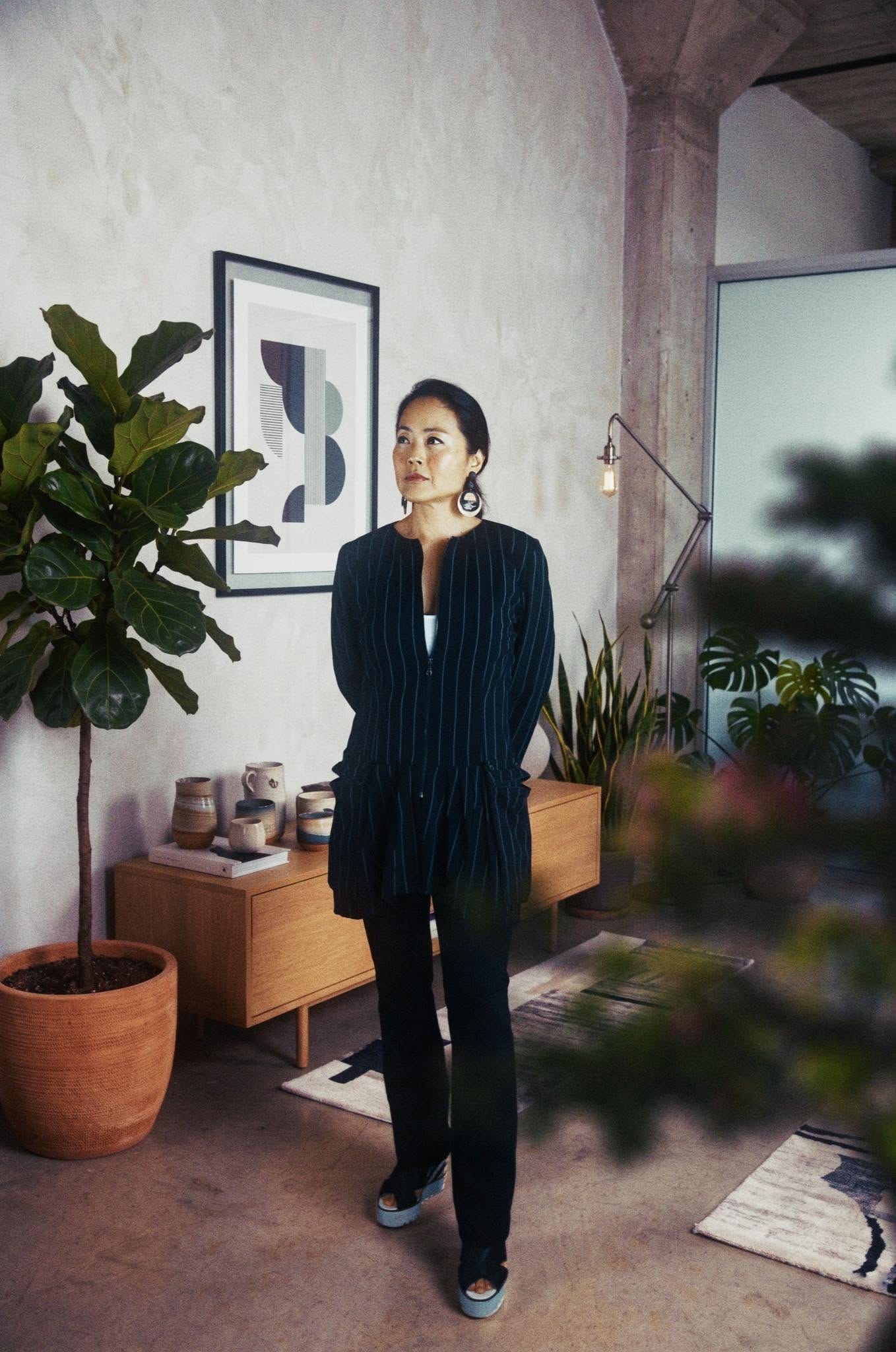
Chiara Cox is a multidisciplinary artist, educator, and cultural leader dedicated to empowering Filipino communities through creativity, heritage, and human connection. Her work spans exhibit curation, filmmaking, events production, music performance, and advocacy, focusing on amplifying underrepresented Filipino voices and fostering cross-cultural collaboration. You can find her on www.chiaracox.com.
(NOTE: To check out Chiara’s events check out her EVENTS tab on her website HERE)
How do you feel about Filipino representation in America today? Do you think we’re getting the visibility we deserve?
For the past four years, I have served as Art and Music Ambassador to my local Filipino American community in South Carolina where Filipinos only make up 1-2% of the population. In that role, I have focused on introducing Filipino culture and contributions to my home state by way of contemporary Filipino textiles, folk and classical music, Indigenous traditions, and Filipino American history.
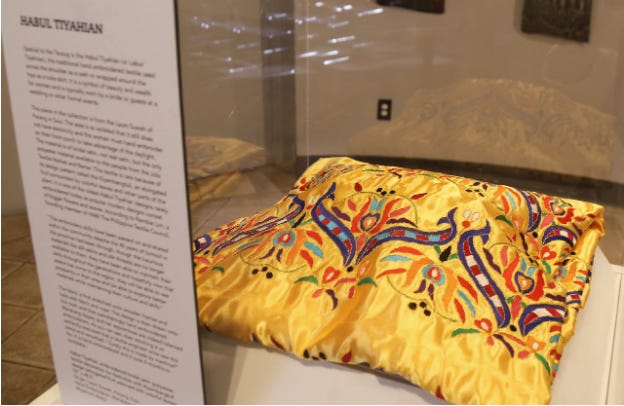
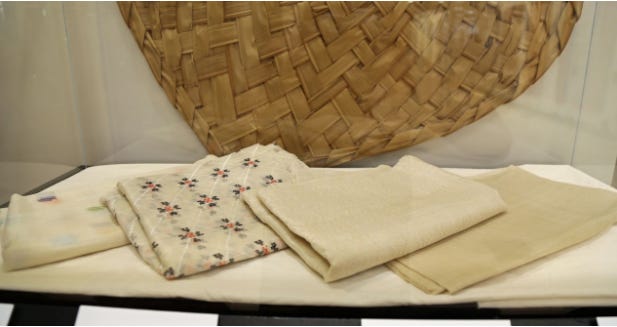
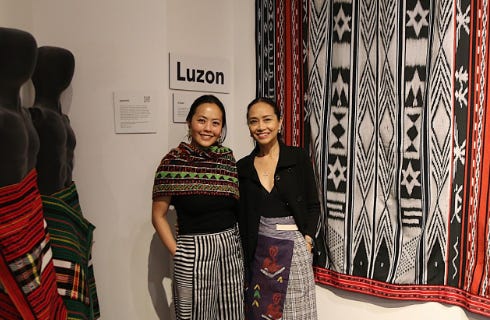
Filipino Textile Exhibit at Charlotte History Museum in NC
Filipino Textile Exhibit at the Southeastern Quilt and Textile Museum in Carrollton, Georgia
Filipino Textile Exhibit at Richland Library, Columbia, SC
Filipino Textile Exhibit at the Museum of Science and History at Jacksonville, FL
In my cultural preservation and promotion efforts, I discovered that authentic representation of Filipino culture is oftentimes lacking in the USA. I have heard from many Fil-Am organizers that most of their community members prefer to attend social gatherings over cultural events. Moreover, Filipino arts connoisseurs in the Philippines tend to view Fil-Am interpretations of traditional dance, art, and music as copycat versions that are sometimes unrecognizable adaptations of the originals. While all this may be true, the contemporary Filipino textile collection I curated with HABI: The Philippine Textile Council successfully travelled from Richland Library in South Carolina to the Charlotte History Museum in North Carolina to the Southeastern Quilt and Textile Museum in Georgia and finally to the Museum of Science and History in Florida, all fully supported by their various local Southeastern Filipino American communities with dances, music, fashion shows, and/or food events.
“Belongings” exhibit at Richland Library, Columbia, SC
The newest exhibit that I curated happened because of a chance encounter with a Puerto Rican lady who gave me the belongings of her deceased Filipino American neighbor. I created the “Belongings” exhibit to highlight the Filipino American immigrant experience through the stories belongings leave behind. It recently premiered at the Richland Library in South Carolina and will be there till the end of October. I have already been in discussions with a museum in Virginia for a 2027 show there. On a national scale, “How Can You Forget Me: Filipino American Stories” is currently exhibiting at the Smithsonian Asian Pacific American Center. Advised by my friend Erwin Tiongson, it tells of the early 20th century Filipino immigrant stories. I hope this kind of visibility continues especially as grants for diversity initiatives have been pulled. I also hope our community continues to be represented outside the designated AAPI Heritage and Fil-Am History months.
Art museums are more difficult for Filipino exhibits, however. The Cummer Museum in Jacksonville, Florida did showcase “Maia Cruz Palileo: Days Later, Down River,” sponsored by a dear friend Carmina Aldana and her husband in 2023. The Aldana’s also sponsored a major Filipino mural in Downtown Jacksonville by Fil-Am artist Grace Bio.
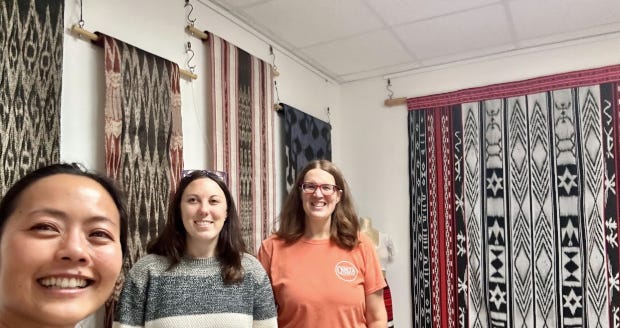
Filipino Textile Exhibit at the Museum of Science and History at Jacksonville, FL with Chiara and Carmina Aldana who sponsored the first Filipino mural in Downtown Jacksonville by Grace Bio (below). Her son Car was my assistant curator on the “Belongings” project.
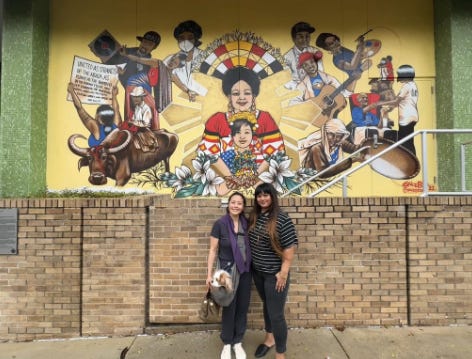
Chiara and Grace Bio (artist) in front of the first Filipino mural in Jacksonville, FLsponsored by Carmina Aldana (pictured above).
I have also introduced a few Southeast art museums to the non-profit organization International Arts & Artists (IA&A) based in DC which produces art exhibits worldwide. IA&A was offering a contemporary art exhibit by a Filipino painter that was ready to be exhibited, charging less fees than other traveling exhibits, but there was simply no interest from the curators. Were they just not keen on the artwork or maybe they thought that their audiences were not ready for a Filipino artist feature? I just don’t know.
(For those who visit NYC, Silverlens Gallery does an amazing job at Filipino artist representation.)
How do we keep our Filipino culture and history alive and pass it on to the next generation?
I believe quality research, documentation, and community events are key in keeping our Filipino culture and history alive. Quality must be emphasized as we need to preserve and promote what is authentic, and not simply fabricated without a depth of knowledge. Through reputable mentors, the next generations can access substantial information about their heritage.
Cristina Juan and Marian Pastor Roces’ highly regarded digital humanities project, Mapping Philippine Material Culture, is an important example. With an impressive open access online inventory of Philippine objects dating to the 1960s, the significant amount of information is available to all.
The paid section is an extra resource for subscribers who want to support what I’m building and help keep Filipino Art Dispatch going. I’m still working on growing the perks and resources available here, and as the newsletter grows, so will the benefits of being a paid subscriber. Every subscription helps me dedicate more time to sharing Filipino art, history, and culture. ❤️
Continue reading this post for free, courtesy of The Filipino Art Dispatch.